
Costs
Pricing Validation: What a $50,000 Salary Costs an Employer
Pricing validation for a job offer: how a $50,000 salary loads to about $65,000 to $70,000 with benefits and payroll taxes, plus BLS wage bands.
What to take away
- Your salary is not your employer's cost. Benefits and payroll taxes push a $50,000 salary to roughly $65,000 to $70,000, which is the number pricing validation starts from.
- BLS Occupational Employment and Wage Statistics give a median for your occupation and metro. That is the anchor for a negotiation.
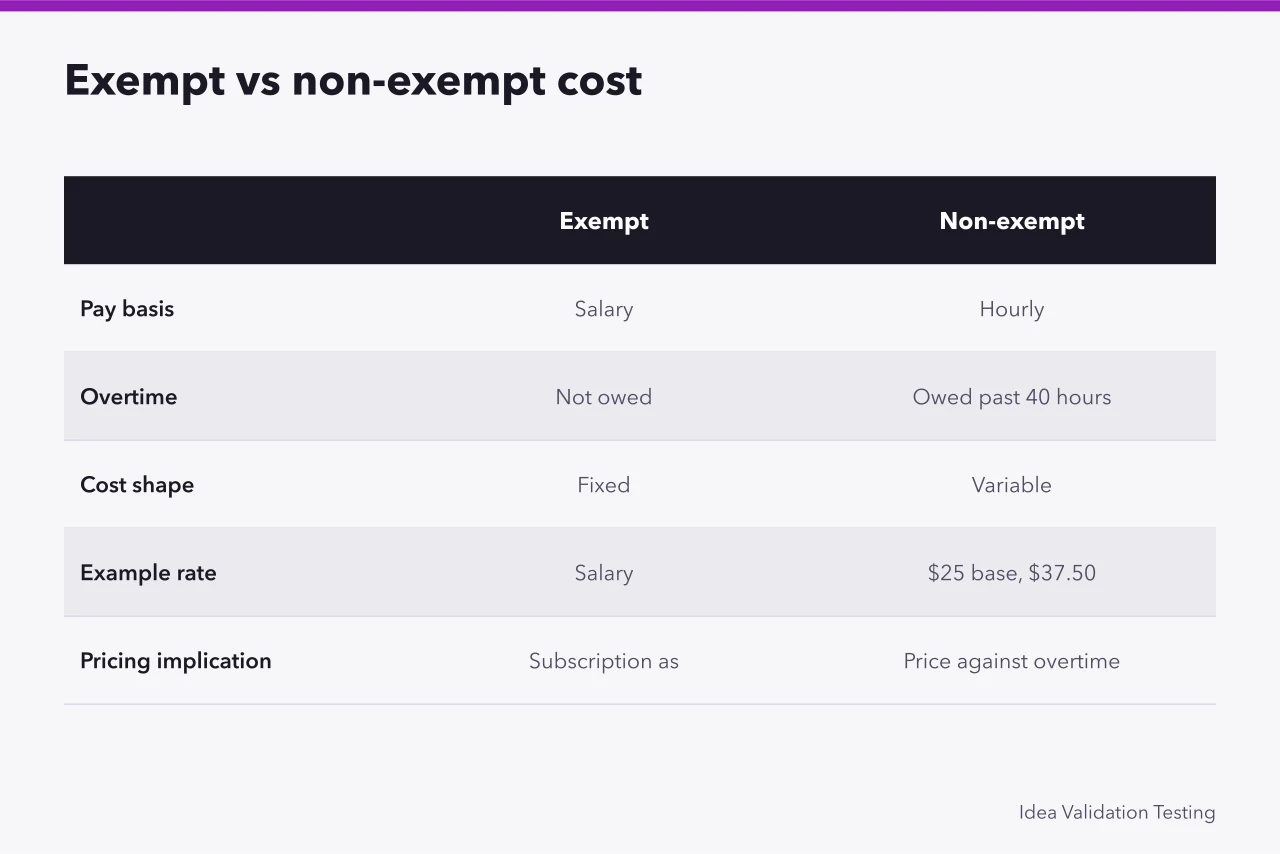
- Exempt or non-exempt changes your pay. A non-exempt role at $25 an hour costs your employer $37.50 in an overtime hour.
- A 1099 engagement trades benefits and overtime protection for a higher rate. The legal test, not the label, decides which you are.
- Texas charges no state income tax, but Social Security, Medicare, and federal income tax still leave your check first.
Your salary is a fraction of what you cost
A job posting names a salary. Your employer's budget line is larger, and the state you work in changes what reaches your account. Pricing validation means holding both numbers side by side: the posted salary and the loaded cost behind it.
Benefits add roughly 30 percent to wages in common private-sector estimates, and Social Security and Medicare add about 8 percent more. Load a $50,000 median that way and the role costs an employer roughly $65,000 to $70,000.
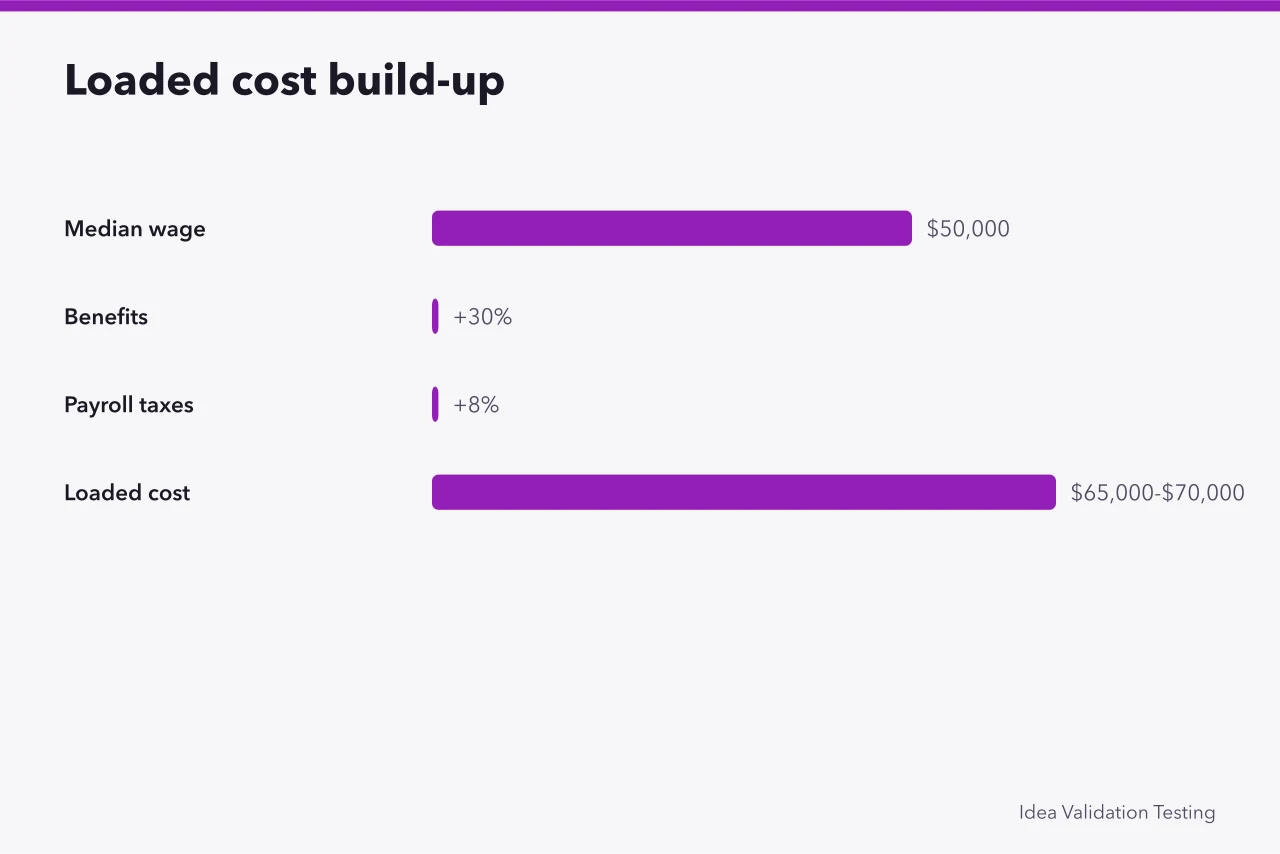
That gap explains why a $3,000 raise feels large to you and small to your manager.
Reading a BLS wage band for your metro
The Bureau of Labor Statistics publishes a wage band for each occupation, from the 10th percentile to the 90th. The median sits between them.
Treat the 10th percentile as a training wage and the 90th as a supervisor rate. Neither matches what a standard posting describes, and the same title pays differently in Austin and Atlanta.
Reading a BLS wage band
| Number | Where it comes from | What to do with it |
|---|---|---|
| Median wage | BLS OES for your metro | The anchor for your counter |
| 10th percentile | Same page | A floor, often entry level |
| 90th percentile | Same page | A supervisor rate, not yours |
| Loaded cost | Median plus benefits and payroll taxes | What the employer already spends |
Three pages cover the titles readers ask about most. The Occupational Outlook Handbook entry on accountants and auditors gives national and state figures for public practice and industry. State estimates for management analysts let you compare pay across states. Metropolitan estimates for project management specialists cover Austin, Seattle, and San Jose.
Exempt or non-exempt changes your paycheck
The Fair Labor Standards Act sets the floor. An exempt employee draws a salary and is owed no overtime. A non-exempt employee must be paid time and a half after 40 hours in a workweek.
A non-exempt role at $25 an hour pays $37.50 for each overtime hour. Regular overtime can add more across a year than a modest raise would.
The salary threshold for exemption moves with rulemaking, so confirm the current figure with the Department of Labor. Your offer letter should name the classification, and reading a US job offer covers what else to check before you sign.
W-2 or 1099: which side of the line you sit on
On a W-2 job the employer pays half your payroll taxes and carries unemployment insurance. A 1099 engagement pays a higher rate and leaves both to you. That higher rate carries what the employer would otherwise cover.
The Department of Labor's economic reality test decides which label fits. It weighs control, investment, opportunity for profit or loss, and how long the arrangement lasts. Naming you a contractor does not settle the question.
Answer these before you accept a contractor rate:
- Does one client set your hours and location?
- Do you use their equipment and tools?
- Can you take other clients without asking?
- Is the arrangement open-ended?
- Could an employee do the same work on payroll?
Several yes answers point to employment. Misclassification can cost you overtime pay and unemployment coverage you would otherwise have. IRS Publication 15 sets out the withholding rules and SSA wage limits that decide what either check withholds.
Example: a $52,000 dispatcher in Houston
Benefits at roughly 30 percent add about $15,600, and payroll taxes near 8 percent add about $4,200. The employer's cost lands near $71,800 before recruiting. Treat both loads as illustrative.
Five moves before the call:
Example: a $52,000 dispatcher
- Pull the BLS median for your occupation and metro.
- Write the loaded cost at a 30 percent benefits load and 8 percent payroll tax.
- Note where the posted range sits against that median.
- Ask for the classification and the benefits summary in writing.
- Compare the offer to the loaded figure, not to the salary alone.
Ask for a total compensation statement if your employer produces one. It puts benefits and the employer share of taxes beside the salary.
A pay conversation gets easier once you know the employer's number, not just your own.
Common questions
What is a total compensation statement, and should I ask for one?
It lists salary, benefits, employer tax contributions, and retirement contributions. Ask for yours and compare the 401(k) match line with what your offer letter says.
Is a 1099 rate 30 percent above a W-2 salary enough?
That markup roughly covers the employer's tax share and lost benefits. It is a starting point, not a rule, so price your own health coverage and unpaid time off.
Does living in Texas improve my take-home pay much?
It removes one deduction. Social Security, Medicare, and federal income tax still come out of every check.
Why does my pay differ from the BLS median?
The band averages industries, experience levels, and company sizes. Your industry, metro, and years in the role move you inside it.